Contents
Nine chapters. One system.
Chapter 1
The date you already own and never use
Every day is somebody's birthday. The only question is who remembers it first.
Somewhere in your town tonight, a family is ordering a takeaway because it is somebody's birthday. The order will be big. The customer will be in a generous mood. And they will remember where the food came from. The only question is whether it came from you.
You already know how to cook. You already know how to serve. What you do not have is a reason to be in front of the customer on the one evening a year when they will spend without thinking. The delivery platforms have that reason — they control the app, the prompts, the notifications and the data. You get the order. They get the customer.
Here is what the big greedy delivery platforms do not want you to know: they are not selling your food. They are selling your customer back to you, one commission payment at a time. Every birthday that passes without you reaching out is one they will happily charge you for next year.
A birthday is different. It is not a marketplace keyword. It is a date that belongs to one person, recurs every single year, and is already stored somewhere in your business — on an order form, a booking, a loyalty card, a receipt, a conversation at the counter.
Capture that date, and you own something no platform can sell you: a reason to contact your own customer, at exactly the moment they are deciding what to eat, without paying a penny in commission.
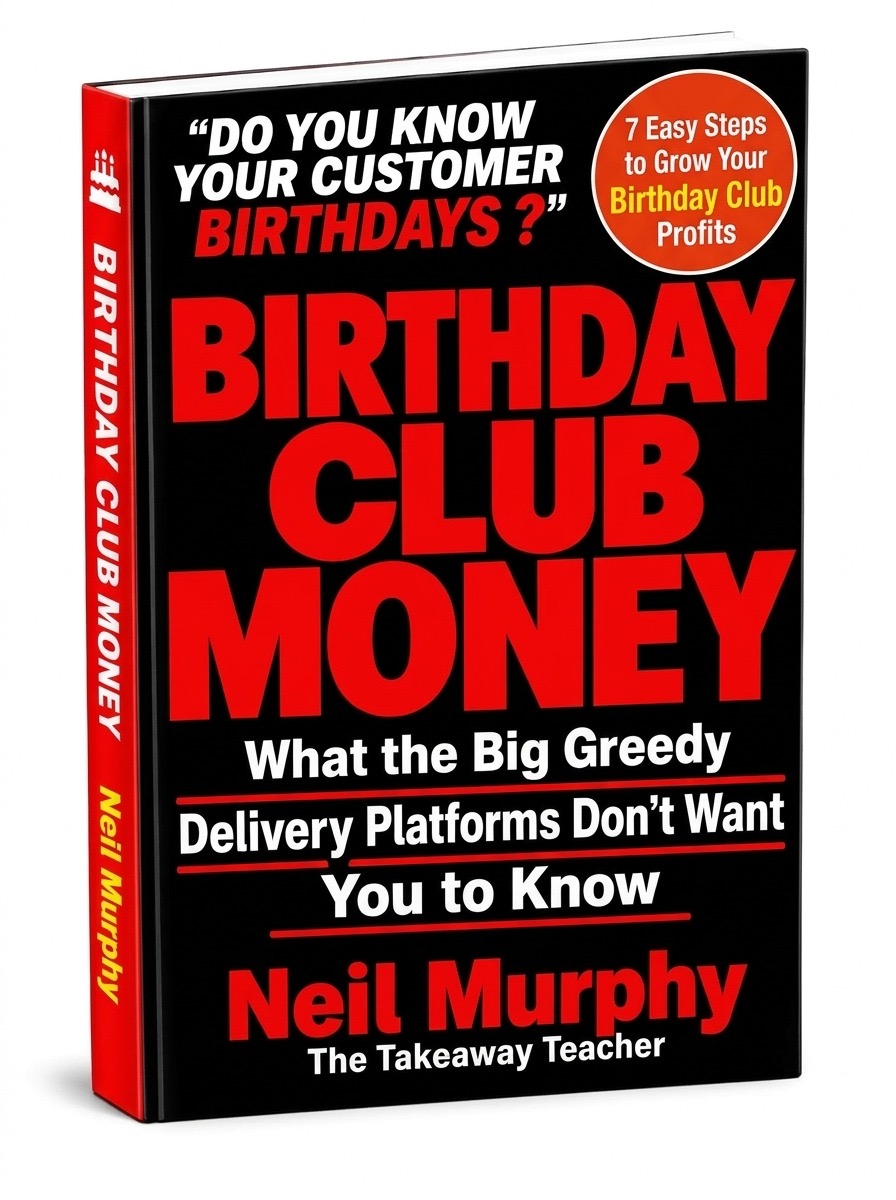
This book is the whole system — how to collect birthdays, what to say, when to say it, how to make the offer feel like a gift, and how to turn one birthday a year into a customer who stays for a decade.
It is called birthday club money because that is what it is. Not a nice gesture. Not a bit of fun on Facebook. A repeatable, automated revenue stream that grows every month you run it.
Chapter 2
The Birthday Club Monthly Prize Draw
A birthday club needs a heartbeat, and the draw is it. One prize a month gives you twelve reasons a year to contact every member — and a story worth posting that is not an advert.
One draw a month. A year of noise.
A birthday club is only as good as the attention it gets. The monthly prize draw is the engine that keeps it alive — it creates real buzz, gives you leverage every month, and hands you something worth announcing on social media.
It Creates Real Attention
A monthly prize draw gives your birthday club a heartbeat. There is always something happening, always a reason for your messages to be opened, and always a reason for customers to stay on your list.
It Builds a Genuine Buzz
One winner, announced properly, makes more noise than any discount you could run. They tell their family, they post about it, and they come back in with people to collect the prize.
It Gives You Leverage
The draw is your reason to contact every member, every single month — birthdays, milestones, the draw, the winner. That is twelve useful reasons a year to be in front of your customers, without ever sounding desperate.
It Works on Social Media
Announce the draw at the start of the month and the winner at the end. Tag the winner, share the photo, post the reaction in the shop. Their friends all see your name on a happy post instead of an advert.
How the monthly draw runs
The entire thing is automated once it is set up: entries are collected with every birthday opt-in, entries are drawn from your member list, and the announcements drop into the same monthly schedule as your birthday messages.
The prize costs less than a small advert — and the buzz it creates is worth far more. One winner, one post, one story, months of attention.
Chapter 3
We studied Moonpig
The most valuable thing in a birthday business is not the card. It is the date.
We studied Moonpig extensively, because it proves a principle that matters far beyond greeting cards: customer data tied to a repeatable life event becomes a commercial asset.
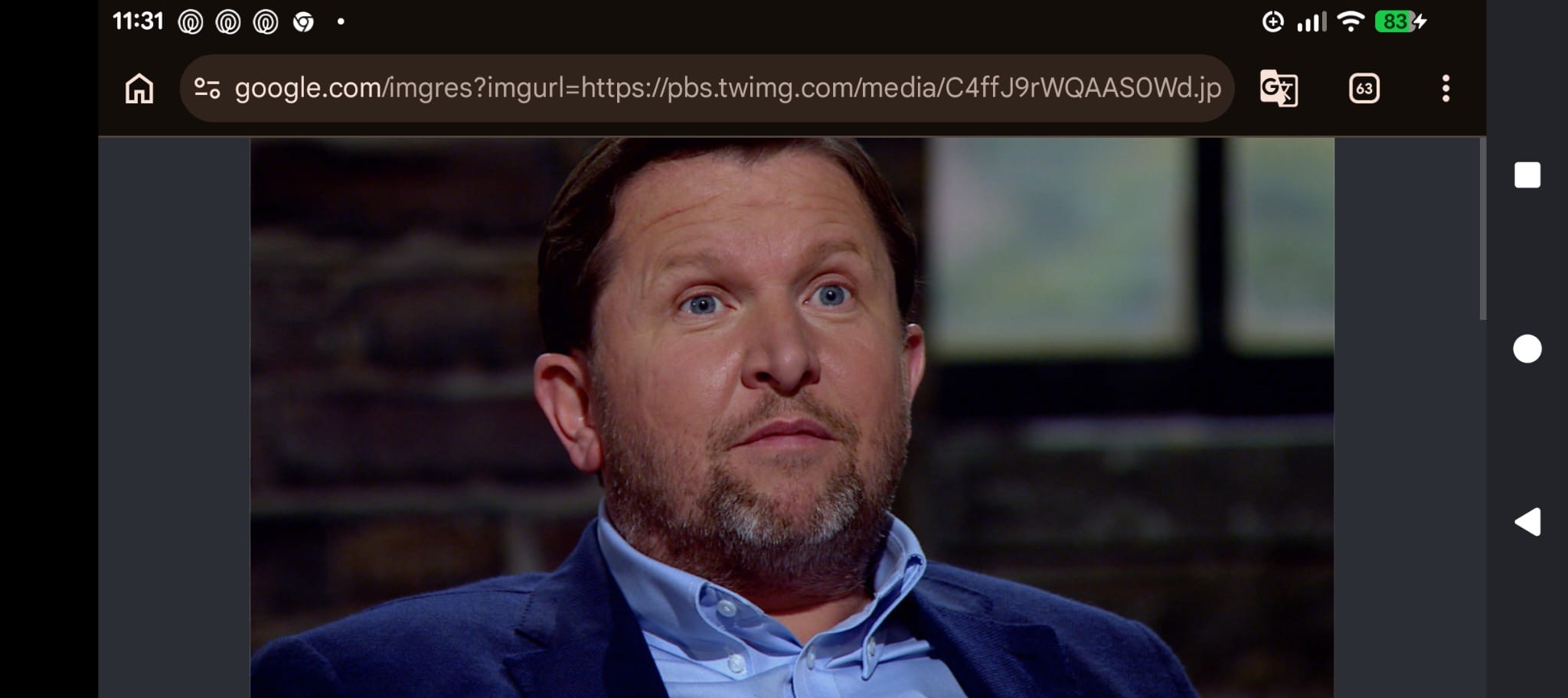
Nick Jenkins
Founder of Moonpig · Dragon on Dragons' Den
Sold Moonpig for an estimated £120 million
Nick Jenkins did not invent birthdays. He just built a business that owns the moment around them. Moonpig collects the date, remembers it forever, and arrives every year without the customer having to think about it. That single piece of data — a date — is worth more than any card on the shelf.
Birthdays are uniquely valuable to a takeaway for three reasons. They recur every year, so the value compounds. They are easy to remember, because everybody knows their own. And they naturally trigger a purchase, because a celebration needs feeding.
Moonpig sells a £3 card off the back of it. You can sell a £60 family feast.
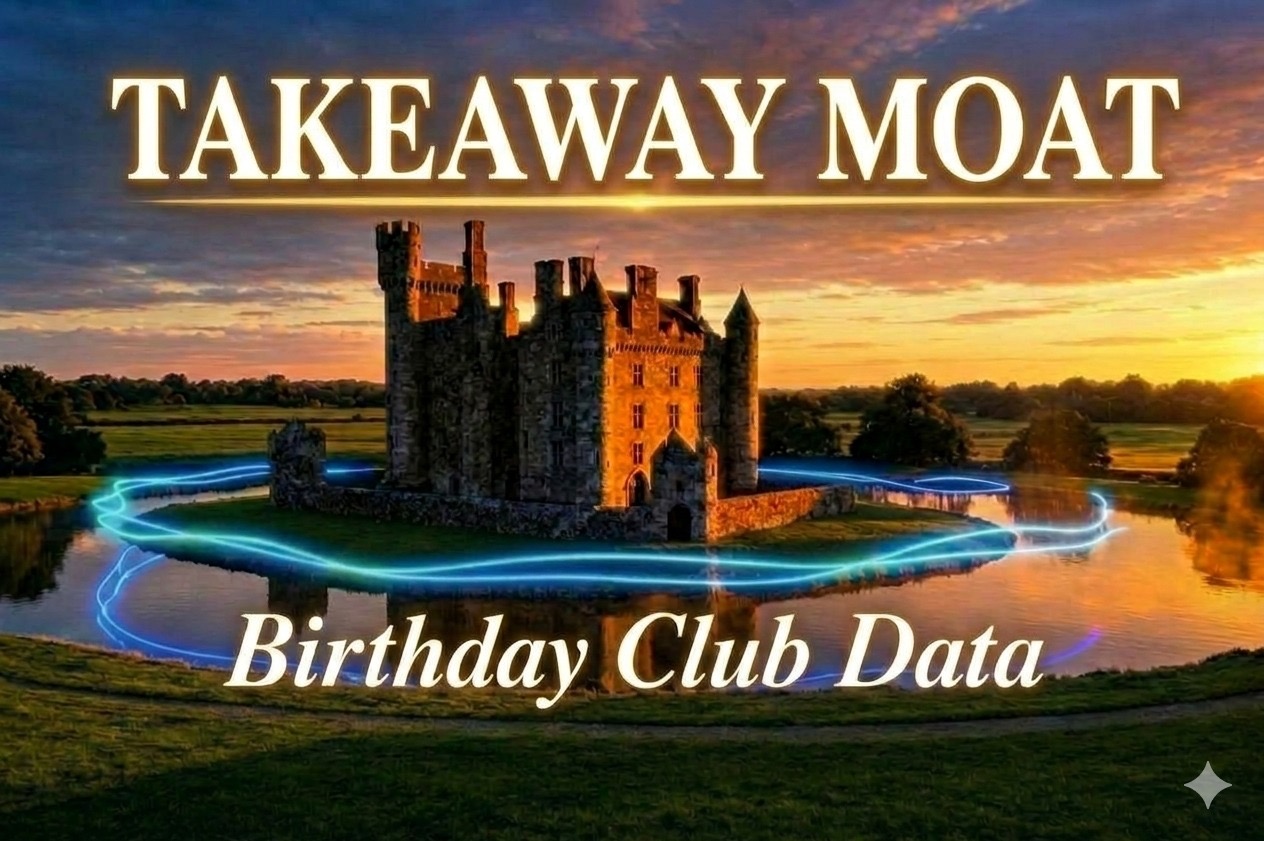
For a restaurant or takeaway, birthday data is worth more than ordinary customer data because it makes marketing repeatable and predictable. You are no longer guessing when to send a message. You know. You send it thirty days before, fourteen days before, on the day, and a fortnight after — every year, for every customer, automatically.
That is how a list becomes an asset. Instead of renting traffic from a marketplace that compresses your margin, you build a direct relationship that produces revenue on a schedule. It improves retention, raises lifetime value, and makes the business more valuable if you ever sell it.
It is not only households, either. Local directors, office teams and workplaces all have birthdays to celebrate with food, cakes and occasions — which means the same system feeds your catering and corporate orders too.
Birthday data is not a marketing list. It is a defensible moat, and it is the one asset a delivery platform can never take away from you.
Chapter 4
The psychology of birthdays
You are not selling a discount. You are selling permission to celebrate.
A birthday is the one day a year a person gives themselves permission to spend freely. They are not looking for the cheapest option. They are looking for the best night, and they will pay for it.
They order bigger
Nobody orders the smallest thing on the menu on their birthday. They order the feast, the sharing platter, the extra sides, the second round of naan. Restraint goes out of the window.
They bring the group
A birthday takeaway is rarely for one person. It is for four, six, eight — all eating your food and all remembering where it came from.
They say yes to extras
Extra portions, extra dips, the dessert they would normally skip. The usual friction around spending disappears. A birthday customer is the easiest upsell you will ever have.
They remember you
People do not remember the Tuesday they cooked pasta. They remember the takeaway that made their birthday night feel special — and they come back to it for years.
There is a second piece of psychology that matters just as much: people are moving their celebrations home. No parking, no £40 taxi, no babysitter, no waiting for a table. Supermarket drinks, a film for the kids, and one big order of food that makes the evening feel like an event.
The birthday celebration that used to happen in a restaurant is now happening in living rooms up and down the country. The food is coming from a kitchen exactly like yours. The platform does not care whose — you should.
One great birthday order can turn a once-a-year customer into a regular. That is the whole prize, and it is won by whoever turns up first with the right message.
Chapter 5
The pop-up website page
Traffic you do not capture is traffic you paid for and gave away.
This is the bit almost every takeaway skips. You spend money getting someone to your website, then let them leave without capturing a single thing about them. The pop-up is how a stranger becomes a date in your database.
What it says
"Join the Birthday Club — free treat on us during your birthday month, plus entry into our monthly prize draw." Then one field for the date, one button. Nothing else. No newsletter pitch, no terms, no paragraph about your heritage. The offer does the work.
- One promise, in one line — free birthday treat, every year, no catch.
- One field: the birthday. Email or mobile after it, never before.
- A picture of the actual food they will get, not a stock birthday cake.
- The name of the club and the prize draw, so joining feels worth something.
- A thank-you screen that says exactly what happens next and when.
- —Time it right: appear after a few seconds of browsing, not on arrival.
- —Never block the menu on a phone. The pop-up must be dismissible with one tap.
- —Once dismissed, stay dismissed. Show it again next visit, not next click.
- —Keep the form above the fold on a 390px screen — no scrolling to reach the button.
Build the same page as a permanent link — yoursite.com/birthday-club — and put it everywhere: QR code on the menu, the flyer in the bag, the link in your Instagram bio, the receipt, the delivery note, the window. One page, many doors.
A pop-up on the website and a link on everything printed. Between those two, you will never run out of birthdays to celebrate.
Chapter 6
The birthday club marketing system
Capture the date, then let the sequence do the selling.
Collecting a date is step one. The system is what turns that date into four messages a year, sent by email, SMS and WhatsApp, without you remembering anything.
1. 30 days before
The heads-up
A friendly message lands a month out. "Your birthday is coming — we would love to help you celebrate." You are now in their head before they have planned anything.
2. 14 days before
The reminder
A nudge two weeks out with the offer restated. They are starting to make plans, and you are already on the list.
3. On the day
The voucher
On the birthday itself: "Happy Birthday! Here is your voucher — celebrate with us tonight." The perfect message at the exact moment they decide what to eat.
4. 14 days after
The follow-up
A warm check-in a fortnight later. It shows you care, catches anyone who missed the voucher, and invites them back.
Two rules make or break this. First, make the offer valid for the whole birthday month, not one day. A one-day voucher gets missed, expires and is wasted. Thirty days of generosity gets redeemed.
Second, it must read like a gift, not an advert. "10% off all orders this month" is a promotion. "Happy Birthday — have a free dessert and a drink on us" is a present. Same cost, completely different response.
Sounds like an advert
"10% off all orders this month!"
Sounds like a gift
"Happy Birthday! Have a free bottle of pop and a dessert on us — celebrate with us any time this month."
Personalised with their name, arriving at the precise moment they are deciding what to order. You are not interrupting them. You are helping them celebrate.
Chapter 7
The birthday club sales funnel
Maximum birthday money in minimum time — with no extra staff.
A birthday club is not one message. It is a funnel: capture the attention, capture the date, automate the offer, upsell the order, and keep the customer for the next celebration.
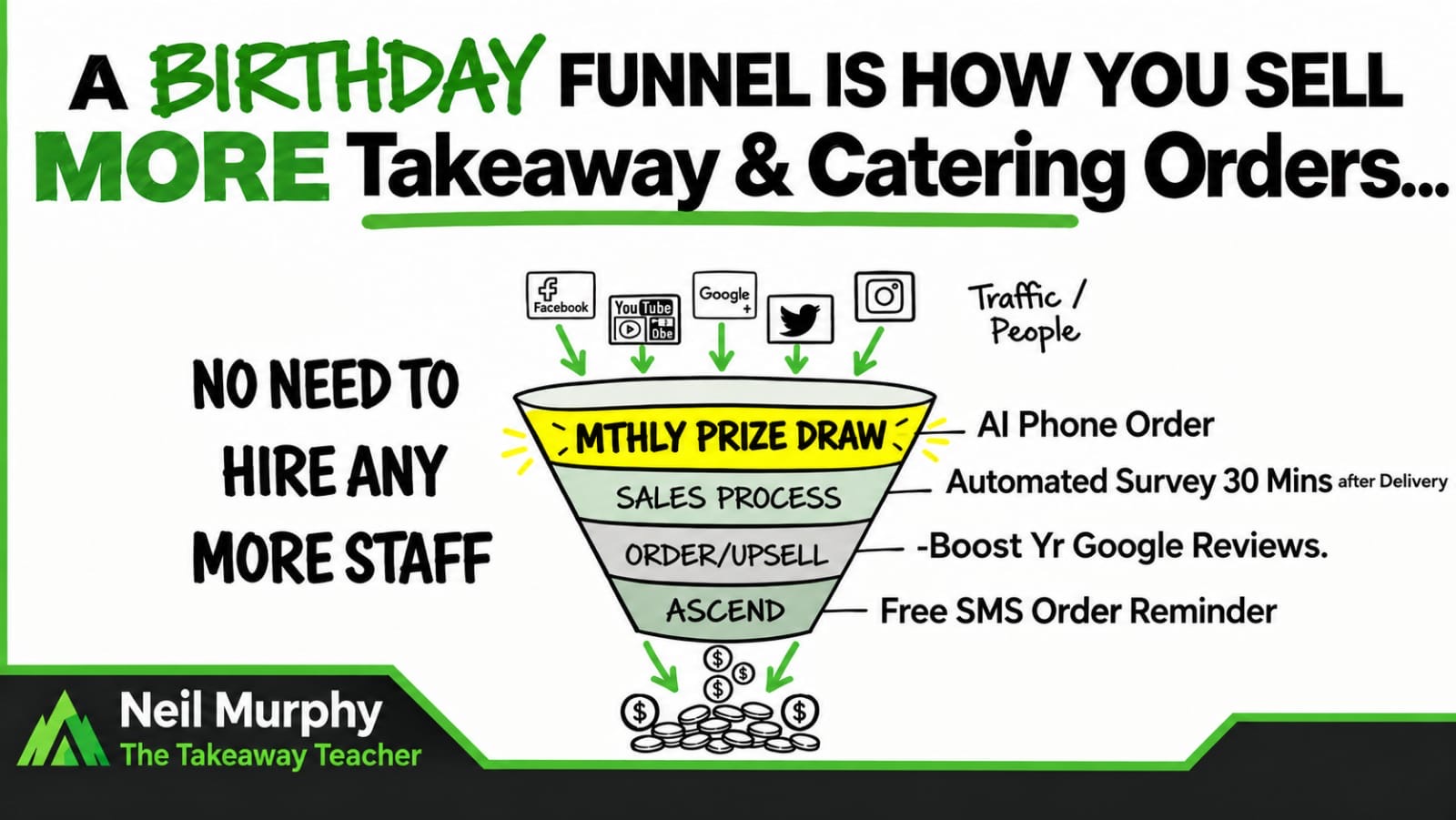
Top of the funnel — attention. Every plate, bag, receipt, flyer, table card, window and social post points at one thing: join the birthday club. You are not asking for a sale yet. You are asking for a date.
The opt-in — the date. One field, one promise. The moment they hand it over they are in your system for life, on your terms, with no marketplace sitting in the middle taking a cut.
The sequence — the selling. Four messages across the birthday month, personalised, by email, SMS and WhatsApp. The offer does the closing while you are in the kitchen.
The upsell — the average order value. Birthday orders are group orders. Suggest the feast, the sharing platter, the extra sides, the dessert they would normally skip.
The repeat — the second celebration. Two weeks later, check in. Then next year, the whole sequence starts again, automatically, for every customer you have ever captured.
That is the whole trick the platforms do not want you to run: capture, automate, upsell, repeat — and keep every penny of the margin.
About the Author
Meet Neil Murphy

Neil Murphy
The Takeaway Teacher
Director, DeckchairAI
Neil Murphy is a seasoned sales expert, trainer, and entrepreneur with 30+ years experience helping businesses thrive in competitive, cut-throat markets.
He has coached hundreds of salespeople and mentored numerous business owners in sales, marketing, negotiation, business presentations, and new technology.
Neil is an in-demand recruiter and headhunter, respected and known for building high-performing sales teams. He’s also skilled in franchising ventures as well as raising venture capital to scale businesses.
His client portfolio includes Mercedes-Benz, Ralph Lauren, Royal Insurance, Western Provident Association, and hundreds of hospitality venues and restaurants across the UK.
His ability to adapt and innovate with new trends and technology is demonstrated by applying AI in all aspects of business — to his own ventures and other businesses — to drive growth, sales and efficiency.
He has also embraced the global power of podcasts, both as an educational and learning tool, and as an expert podcast interviewer himself.
Neil is a published author with numerous books available on Amazon. His newest publication — Daytime Takeaway Profits — draws on decades of expertise to help takeaway and catering businesses maximize their daytime sales and better expand their market reach.
When not advising businesses or writing, Neil enjoys football, UFC and spending quality time with his family.
Let us build your birthday club
We capture the dates, build the pop-up page, write the sequence and run the monthly draw — so the birthdays come to you on their own.
07831 571890 · neil@deckchairai.com
DeckchairAI
© 2026 DeckchairAI · Andover, UK · Birthday Club Money · neil@deckchairai.com
Chapter 8
Social media, everywhere and everyday
Ten minutes a day beats one big campaign a year.
The birthday club gives you something most takeaways never have: things worth posting about, every week, that are not adverts.
What to post
How to run it
The point is not going viral. The point is being the takeaway people think of when a birthday appears in their house. That happens through repetition: the same warm name, the same promise, showing up in the same places, every day.
Everywhere and every day. That is the whole social media strategy, and a birthday club makes it easy to follow.